
Integrative Somatic Care
in Oregon & Colorado
Somatic Therapy
Therapy can include more than what you think and say.
When insight helps, but your body still responds on its own.
Somatic therapy brings gentle attention to sensations and nervous-system responses as part of psychotherapy. At Hidden Trails, you decide what feels workable.
Does this sound familiar?
When insight has not been enough.
These experiences can be an invitation to explore body-aware therapy at your own pace.
01 /
Your body stays prepared
Triggers, vigilance, or overwhelm can appear even when you know you are safe now
02 /
You disconnect
Numbness or shutdown may have helped you get through difficult experiences.
03 /
Relationships feel familiar
Shame, boundaries, and managing others can become patterns that are hard to shift.
04 /
Small things bring up big reactions
A tone of voice, conflict, or unexpected change can leave you feeling overwhelmed, ashamed, or on edge.
Trauma can continue to shape the present
The impact of an experience is not measured only by what happened or how long ago it was. Sometimes the ways you adapted to get through it continue to affect your sense of safety, your relationships, and how you respond today.
You do not need to have a clear label for your experience, or tell your whole story at once, to begin exploring its impact in therapy.

The Hidden Trails approach
Care that respects your pace.
You and your therapist decide what feels manageable. Stabilization, consent, and choice are part of the work, not steps you have to earn.
Depending on your goals and clinician, therapy may include EMDR, Brainspotting, Somatic, relational, IFS parts-oriented, or other approaches including Psychedelic support.
A Closer Look
Trauma can affect more than memory.
PTSD symptoms, childhood emotional neglect, attachment wounds, medical trauma, and difficult family experiences may affect your sense of safety or connection. We begin with your present concerns.
How care can help
Weekly Therapy or Focused Care
Weekly therapy offers ongoing space to work at a steady pace. EMDR Intensives may fit a defined focus for some clients after consultation and screening.
Is Trauma Therapy at Hidden Trails a good fit?
Our approach may resonate if you:
Interested in therapy that considers both relationships and body responses
Open to explore options such as EMDR, Brainspotting, Somatic Therapy, EFT, IFS, or others.
Want a collaborative plan shaped around your goals, rather than a fixed timeline for healing
Want to move beyond the past experiences affecting your life today
Need room to move at a pace that feels manageable
Want a say in what you share and how you approach the work
Find your fit
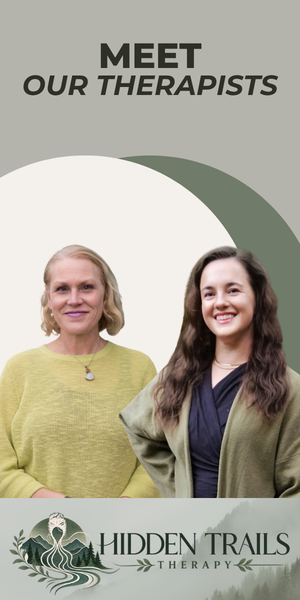
Clinicians who work with trauma
GETTING STARTED IS EASY
Step 01
Schedule a consultation
Choose an available therapist or ask for help finding a fit.
Step 02
Explore your options
Discuss your goals, approach, location, availability, and payment.
Step 03
Begin collaboratively
If the fit works, schedule an intake and shape a plan together.
Related care
Individual Therapy · EMDR Intensives · Somatic Therapy

TAKE THE FIRST STEP
Embrace growth, healing, and the best version of you.
FREQUENTLY ASKED QUESTIONS
Here are some of the most common questions.
If you don’t see your question here, feel free to contact our team and we’d be happy to help.
-
Not necessarily. Your therapist explains the approach and works with you on consent, detail, and pace.
-
No. EMDR and Brainspotting are options alongside somatic, relational, parts-oriented, creative, and other approaches.
-
Yes. We offer trauma-informed couples therapy when it is appropriate for both partners. We begin with a screening process to understand what you’re seeking support with and whether couples work is a suitable next step. If another type of support would be a better fit, we’ll discuss that with you.