
Integrative Somatic Care
in Oregon & Colorado
Brainspotting Therapy
Therapy can include more than what you think and say.
When insight helps, but your body still responds on its own.
Brainspotting is a psychotherapy method that uses a point in your visual field as a focus while you notice thoughts, emotions, and body sensations. At Hidden Trails, a trained therapist can discuss whether it fits your goals and how to pace the work with you.
Does this sound familiar?
When insight has not been enough.
These experiences can be an invitation to explore body-aware therapy at your own pace.
01 /
Insight has not shifted the reaction.
You can name a pattern, but a reminder still brings up distress or a strong body response.
02 /
Words do not capture all of it.
You sense something is happening, even when it is difficult to put into a clear story.
03 /
You want room to go slowly.
You are interested in focused work but want choice about pacing, talking, and when to pause.
04 /
You are exploring your options.
You have heard of Brainspotting and want to know how it might fit alongside other trauma-informed care.
What is Brainspotting?
During Brainspotting, you and your therapist may identify an eye position connected with a particular experience or feeling. You then notice what comes up while maintaining that point of focus. The therapist stays attentive to your responses and helps you work at a manageable pace. Sessions may include talking, quiet observation, and grounding. You can ask questions, shift your gaze, or pause.
Brainspotting is one possible method within therapy. It is not a test that locates trauma in the brain, and no single eye position guarantees a particular result. You and your therapist decide together whether and when to use it.
The Hidden Trails approach
Care that respects your pace.
We begin with your goals, current supports, and what helps you feel able to engage in therapy. Brainspotting may be integrated into ongoing individual therapy rather than used in every session. Your clinician can help you prepare, check in during the work, and make time to reflect afterward.
A Closer Look
What might Brainspotting support?
Brainspotting can work with distressing memory, trauma-related trigger, or emotional and body-based response that has been difficult to shift. Whether it is appropriate depends on your history, current stability, preferences, and treatment goals.
Research on Brainspotting is still developing. We do not promise that it works for everyone, resolves a particular condition, or produces change within a set number of sessions. Your therapist can discuss the evidence, alternatives, and how you would assess progress together.
How care can help
Brainspotting and EMDR: how do I choose?
Both can be used in trauma-focused therapy, but they have different procedures. EMDR follows a structured treatment protocol and typically uses bilateral stimulation. Brainspotting uses a sustained visual point of focus while the therapist follows your experience. The choice does not need to be yours before consultation; the clinician can explain their training, the options they actually offer, and what may fit your situation.
Notice shame, grief, or painful beliefs that remain emotionally charged even when you understand them
Experience body-based reactions that are difficult to explain in words
Want help with a particular experience or pattern that has felt hard to shift
Have a distressing memory or trauma-related trigger that still brings up a strong reaction
Feel anxious or emotionally activated in situations that remind you of a past experience
Carry chronic stress that shows up as tension, overwhelm, or difficulty settling
Is Brainspotting at Hidden Trails a good fit?
Our approach may resonate if you:
Find your fit
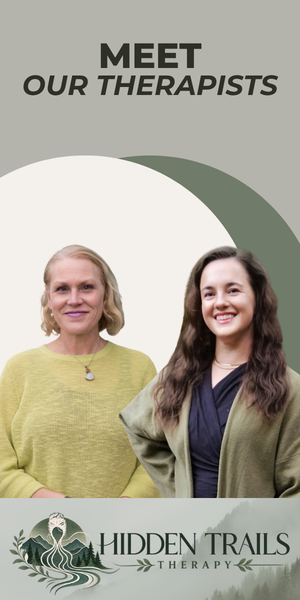
Clinicians who work with Somatics
GETTING STARTED IS EASY
Step 01
Schedule a consultation
Choose an available therapist or ask for help finding a fit.
Step 02
Explore your options
Discuss your goals, approach, location, availability, and payment.
Step 03
Begin collaboratively
If the fit works, schedule an intake and shape a plan together.
Related care
Individual Therapy · EMDR Intensives · Somatic Therapy

TAKE THE FIRST STEP
Embrace growth, healing, and the best version of you.
FREQUENTLY ASKED QUESTIONS
Here are some of the most common questions.
If you don’t see your question here, feel free to contact our team and we’d be happy to help.
-
Not necessarily. Your therapist explains the approach and works with you on consent, detail, and pace.
-
No. EMDR and Brainspotting are options alongside somatic, relational, parts-oriented, creative, and other approaches.
-
Yes. We offer trauma-informed couples therapy when it is appropriate for both partners. We begin with a screening process to understand what you’re seeking support with and whether couples work is a suitable next step. If another type of support would be a better fit, we’ll discuss that with you.
-
Let us know during your consultation. Brainspotting can be discussed as part of your treatment options, and Hidden Trails also offers Intensives as a separate focused service. A clinician can help you understand the differences and assess which option fits your goals.